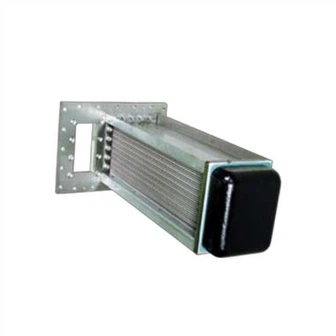
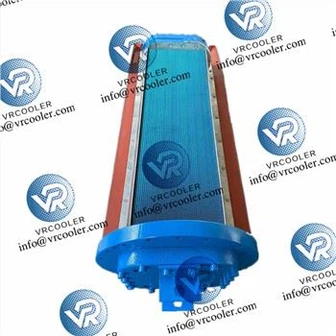
Low-resistance Flue Gas Heat Exchanger For An ORC-based Waste Heat Recovery System
Recovering waste heat from industrial exhaust streams has become one of the most efficient ways to improve energy performance, reduce fuel consumption, and cut CO₂ emissions. Among the technologies used to convert low- to medium-grade waste heat into useful power, the Organic Rankine Cycle (ORC) stands out for its reliability and ability to operate at lower temperatures than traditional steam systems.
A critical component in any ORC-based recovery system is the flue gas heat exchanger, responsible for transferring thermal energy from hot exhaust gases to the ORC working fluid. For many installations-such as engines, boilers, kilns, and industrial processes-a low-resistance flue gas heat exchanger is essential to maintain proper draft, minimize fan power consumption, and ensure stable system performance.
This article explains what a low-resistance flue gas heat exchanger is, why it is important for ORC systems, and how to select one for high-efficiency, low-maintenance operation.
What Is a Low-Resistance Flue Gas Heat Exchanger?
A low-resistance heat exchanger is designed to extract maximum heat from flue gases without causing significant pressure drop in the exhaust system. Pressure drop is critical because:
Excessive resistance forces fans or draft systems to work harder.
Increased fan load means higher electrical consumption.
Too much draft loss can disrupt combustion stability or reduce engine/boiler performance.
High resistance increases the risk of backpressure, which can damage equipment.
By minimizing flow resistance, these heat exchangers maintain safe draft conditions while still delivering the thermal energy required by the ORC evaporator.

Why Low-Resistance Design Matters for ORC Systems
For an ORC to work efficiently, it requires a stable and predictable supply of heat. The flue gas heat exchanger must be capable of:
If the exchanger induces too much pressure drop, the ORC system may receive insufficient heat, reducing power generation efficiency. In some cases, operators reduce ORC load or bypass the exchanger to protect upstream equipment-leading to wasted heat and revenue loss.
Key Design Features of Low-Resistance Heat Exchangers
1. Large Flow Passages
Oversized gas passages allow flue gases to pass through with lower velocity, reducing frictional losses and pressure drop. This is especially important for systems with particulate loading, such as diesel engines or biomass boilers.
2. Optimized Fin Geometry (or No Fins at All)
These reduce the risk of soot build-up and make the exchanger easier to clean.
3. Large Heat Transfer Surface Area
Because reducing resistance usually decreases gas-side heat transfer, designers compensate by increasing the total surface area to maintain heat duty.
4. Materials Resistant to Corrosion and Fouling
Stainless steel (304, 316L)
Nickel-based alloys for corrosive condensing applications
5. Easy Maintenance Access
For soot-forming systems, access ports, removable panels, and soot-blowing lances are essential to maintain heat transfer performance.
Low-resistance flue gas heat exchangers are ideal for:
In many of these systems, maintaining stable draft or protecting turbochargers and combustion chambers is more important than maximizing compactness-which is why low-resistance design is preferred.
In an ORC-based system, the flue gas heat exchanger serves as the evaporator or preheater for the working fluid. Thermal energy recovered from the exhaust is transferred to a specialized organic fluid (such as R245fa, R1233zd, pentane, or toluene), which then vaporizes and drives a turbine to produce electricity.
The greater the amount of recoverable heat, and the more stable its supply, the higher the electrical output of the ORC. This is why a high-performance, low-resistance heat exchanger directly affects ORC system profitability.
Low-resistance flue gas heat exchangers are a vital component of efficient ORC-based waste heat recovery systems. By minimizing pressure drop, improving reliability, and ensuring steady heat transfer, they maximize ORC power output while protecting upstream equipment from harmful backpressure.